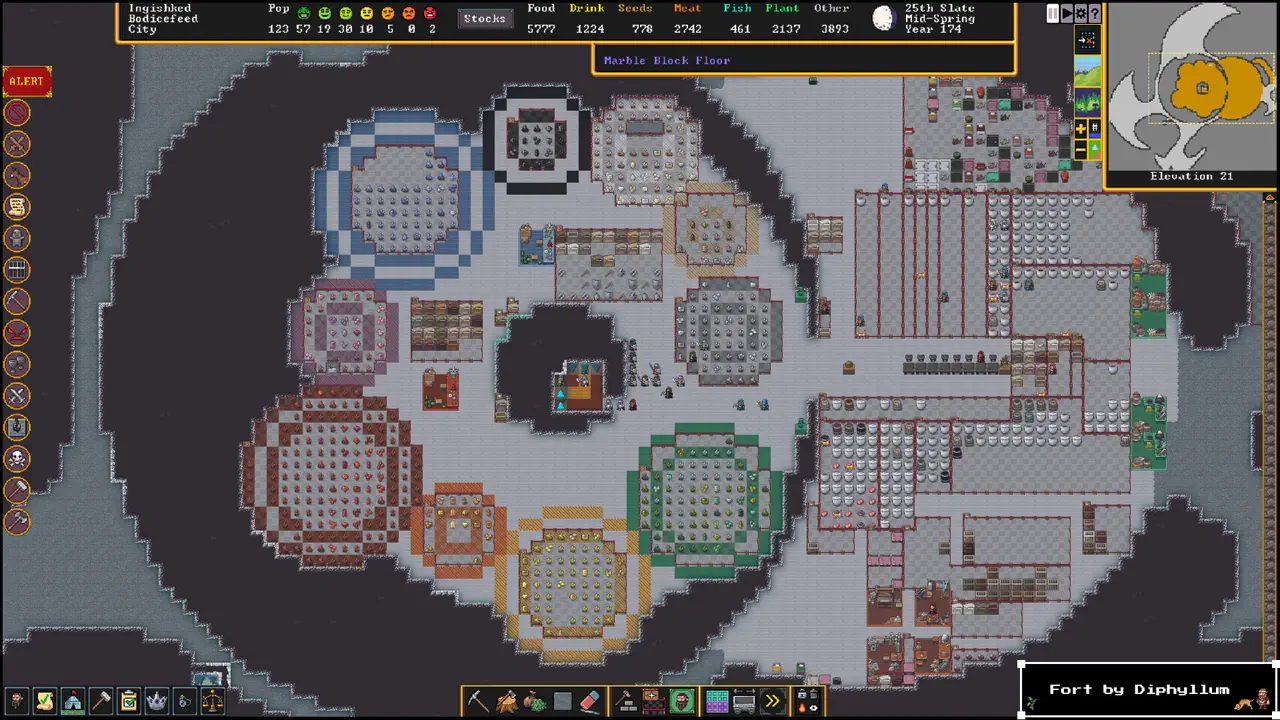
Dwarf Fortress stories are not memorable because the game writes a clean plot. They are memorable because the simulation creates causes that players can trace afterward. A dwarf did not simply die. A dwarf died because a workshop was blocked, because a floodgate was linked wrong, because a brewer was drafted, because a noble demanded something absurd, because a forgotten beast arrived while everyone was already thirsty.
That chain-of-cause quality is the heart of the game's storytelling. Dwarf Fortress does not need cutscenes to create drama. It needs systems that remember enough detail for failure to feel specific.
Why Dwarf Fortress stories feel different
Many management games create setbacks. Dwarf Fortress creates incidents with provenance. Objects have materials and makers. Dwarves have relationships, skills, wounds, memories, moods, and jobs. Worlds have histories before the fortress begins. When something breaks, it often breaks through several connected systems.
| Story ingredient | How Dwarf Fortress uses it |
|---|---|
| Specific people | Dwarves have jobs, relationships, injuries, preferences, and stress. |
| Specific objects | Artifacts, furniture, weapons, and crafts can carry maker and material identity. |
| Specific places | A dining hall, tunnel, bridge, tavern, hospital, or magma channel becomes part of the memory. |
| Specific causes | Bad stockpiles, missing booze, broken stairs, and pathing mistakes explain the collapse. |
The three classic story shapes
The slow logistics failure
This is the story where nothing dramatic happens until it does. A food stockpile is too far away. Haulers are busy. The brewer has another job. A dwarf gets unhappy. Work slows down. A shortage becomes a tantrum spiral. The fortress falls because the ordinary plan was never stable.
The overconfident engineering project
This is the bridge, pump stack, lava channel, drowning chamber, or grand entrance that works perfectly in the player's head and catastrophically in the actual fortress. Dwarf Fortress is unmatched at turning civic engineering into slapstick tragedy.
The personal obsession
Strange moods, artifacts, nobles, vampires, grudges, pets, injuries, and memories can turn one dwarf into the center of the save. The fortress is a machine, but the story often becomes personal when one worker stops being interchangeable.
Famous story patterns to read next
| Story type | Why it matters |
|---|---|
| Boatmurdered-style disaster | Shows how player succession, elephants, magma, and bad management can turn a fort into shared folklore. |
| Tantrum spiral | A classic colony-sim cascade where unhappiness becomes violence, violence becomes grief, and grief becomes more unhappiness. |
| Flood or magma accident | The pure engineering comedy of Dwarf Fortress: one wrong channel can rewrite the whole map. |
| Artifact obsession | A single strange mood can turn logistics, craft materials, and personal fate into one tense episode. |
How to make your own fortress stories readable
- Write down the season and year when something major happens.
- Name bridges, taverns, temples, hospitals, and dangerous tunnels.
- Follow the dwarf who caused the problem, not only the problem itself.
- Pause after a disaster and trace the chain backward: job, object, room, path, mood, or enemy.
- Keep screenshots of the map before and after big engineering projects.
A Dwarf Fortress story is usually a bug report, a family tragedy, and an engineering lesson wearing the same helmet.
Players still share Dwarf Fortress stories years later because the game gives them enough detail to say not only what happened, but why it could only have happened in that fortress, to those dwarves, in that ridiculous order.